

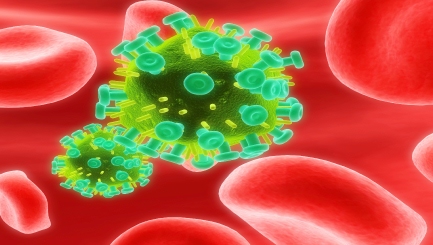

According to research presented at Euroecho 2012, children with HIV have a 2.5% greater chance of experiencing atherosclerosis than those who do not – and require a variety of treatments and lifestyle changes in order to prevent early death from a cardiac-event.
The research revealed that whilst anti-retroviral treatments can help to prolong the lives of HIV patients – it cannot serve as a cure, and the virus remains entrenched within the sufferer’s body. The treatment can help to boost immunity – but the patient will always remain subject to chronic inflammation as the illness persists. This can lead to artery-blockage as the result of patients also experiencing a dramatic flux in the levels of good and bad cholesterol.
Generally patients with HIV, die at least ten years before those with non-AIDS diseases such as cardiovascular illness, cancer and liver-disease. As people with HIV grow they accumulate more toxicity, which can also lead to greater risks of heart-illnesses and other chronic diseases.
The research presented at Euroecho 2012 – sought to ascertain whether children and adolescents with HIV had experienced early atherosclerosis damage, and at what point in their lives. A medical condition, known as IMT, which is a marker of the condition, was measured amongst 150 children and adults infected with HIV, and a control group of respondents who did not have HIV. Following adjustments for age, sex, weight and smoking-status, HIV was readily-more associated with thicker IMT, demonstrating that children and adolescents with the condition have a greater risk of experiencing rigid arteries and therefore – atherosclerosis.
The research also stressed that children and adolescents within this high-risk category, should be given more advice on how to maintain a healthier life-style which promotes exercise, a healthy diet and giving up smoking. However, the researchers admitted that this represented a difficult challenge, as many people at high-risk come from deprived socio-economic backgrounds, in which pursuing such a lifestyle can be hugely problematic.
Comments are closed.